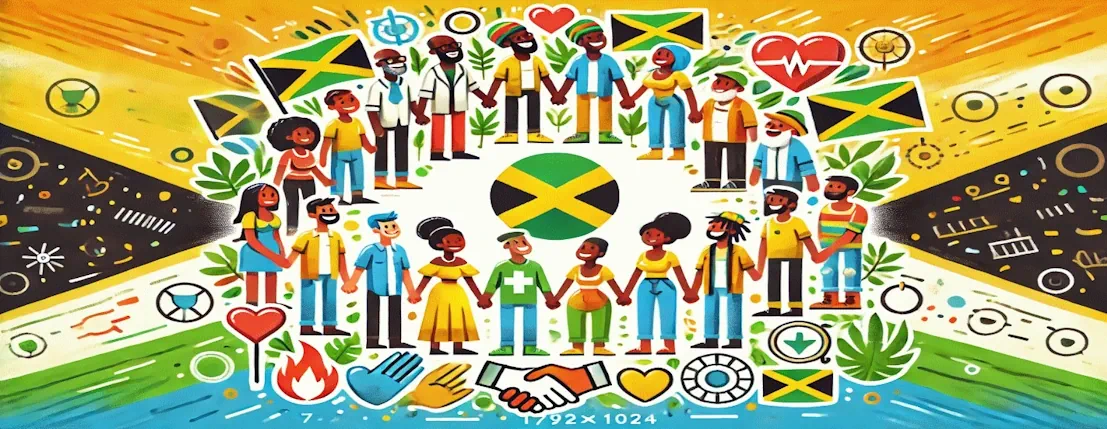
Development of the Friendly Societies
MOVEMENT IN JAMAICA
Historical Overview
Friendly Societies trace back to the burial societies of ancient Greek and Roman artisans, with medieval European and English guilds expanding on this idea to provide mutual assistance in cases of illness and distress. This turn represents a fascinating chapter in the history of social and financial mutual aid. This new “Friendly Societies Movement” emerged in the 17th and 18th centuries in Europe, primarily in Britain, but had spread far beyond Europe by the 19th century, developing as a grassroots response to limited social welfare provisions in an era when government support was minimal.
Origins and Purpose
The Industrial Revolution significantly influenced the friendly societies' movement, especially as urbanization brought workers together in large numbers in industrial cities. This era also brought increased financial insecurity for the working class, who faced poor living conditions, frequent unemployment, and no state-provided social safety nets.
Initially, Friendly Societies were informal groups organized by the working-class people to help each other in times of need. Members paid regular dues, creating a fund they could draw upon in case of hardship. The societies provided financial assistance for medical care, funeral costs, and other emergencies, making them an essential lifeline in times when medical expenses and funeral costs could financially devastate families. The movement grew to play a crucial role in the early welfare and insurance systems of many countries.
Early Development in Jamaica
IIn Jamaica, the Friendly Societies movement has a unique history, shaped by the island’s colonial past and the challenges faced by its working population. They were introduced to Jamaica in the 19th century, influenced by similar movements in Britain and other colonies. They were initially called mutual aid societies and primarily provided funeral benefits, sickness coverage, and support for families facing financial hardship. The societies became especially significant after the abolition of slavery in 1838, when freed people sought to create support systems independent of colonial structures. For these newly freed Jamaicans, especially in rural areas where government support was minimal or non-existent, Friendly Societies became a way to pool resources and protect their communities. They emerged as an essential source of support and self-empowerment for the Jamaican people, especially during times when formal welfare structures were lacking or inaccessible to the working class. From the Friendly Societies emerged institutions like trade unions, fraternal orders (such as the International Order of Odd Fellows), and life insurance companies.
The Order of Odd Fellows, a type of Friendly Society, was established around 1863 in response to economic crises and social unrest. The social hierarchy in colonial Jamaica mirrored the prejudices of Victorian Britain, creating racial and economic divisions. These prejudices created a specific hierarchy of race, which left the “Blacks” struggling at the bottom of the pyramid. This climate of poverty, unemployment, and social tension fueled the growth of the Friendly Societies Movement, which arrived at a critical moment and provided much-needed relief to those in need. Where poverty and suffering were pervasive, Friendly Societies offered needed support.
The British introduced Freemasonry to Jamaica, which significantly influenced the development of the Friendly Societies Movement. Friendly Societies adopted a similar structure to Freemasonry, and the two share a historical connection, having both evolved to address social and economic needs of their time. Freemasonry, however largely comprised of middle and upper-class Jamaicans such as governors, merchants, doctors, lawyers, and clergy. The assistance provided to their members is similar to the mutual aid provided by Friendly Societies. While Freemasonry primarily attracts middle to upper-income individuals, Friendly Societies appealed to the labour class by offering a savings component that met their financial needs.
Growth and Social Role
Friendly societies grew in both membership and structure, becoming more organized with written rules and elected officials. Benefits expanded beyond funeral coverage to include sickness and disability pay. For many, membership in a friendly society provided a crucial source of financial security.
By the late 19th and early 20th centuries, Friendly Societies had spread across Jamaica, with many organized around church communities, shared occupations, or village networks, often blending social support with spiritual or religious fellowship. This connection with the church gave Friendly Societies an additional layer of social and moral support, making them pillars of their communities.
In rural and urban areas, Friendly Societies became a safety net for plantation workers, small farmers, and urban laborers who often had little to no access to formal health care, unemployment insurance, or other forms of welfare. They also began to support educational initiatives, offering scholarships and tuition aid for members' children.
Role in the Garvey Movement and Political Influence
Friendly Societies within Jamaica also played a crucial role in the country's social and political movements. Marcus Garvey, the famed Jamaican social activist and national hero, was significantly influenced by the Friendly Society model. Garvey’s Universal Negro Improvement Association (UNIA) incorporated elements of mutual aid and collective welfare inspired by the Friendly Societies. He advocated for community-based economic empowerment and the pooling of resources as means of racial uplift and self-sufficiency for the African diaspora. Several UNIA branches later sought registration under the Friendly Societies Act to take advantage of the benefits offered by formal recognition.
Throughout the 20th century, Friendly Societies often aligned with labor unions and other grassroots movements that advocated for the rights of Jamaica’s working population. These alliances further strengthened their role as advocates for social justice and economic improvement. Some societies were involved in supporting nationalist movements, pushing for improved social services, better wages, and fairer treatment of Jamaican workers, especially as Jamaica moved toward independence in 1962.
Legal Recognition and Regulation
The rapid growth of these societies eventually led to government recognition and regulation. In Jamaica the Friendly Societies Act was introduced in 1966. It allowed for the registration of three types of Societies under this Act: Friendly Societies, Benevolent Societies; and Specially Authorized Societies – fundamental to the various types of societies registered under the Friendly Societies Act was the spirit of mutual support.
This was a pivotal development, allowing organizations to register for legal protection, which helped formalize their role as quasi-insurance bodies’ granting privileges, like limited liability to the members. By 1903, Jamaica had around 25 registered Friendly Societies. These societies quickly gained popularity, primarily served working-class Jamaicans.
Cultural Significance
In addition to their economic impact, Friendly Societies have left a cultural imprint. Annual meetings and ceremonies often feature traditional music, prayers, and celebrations, keeping alive aspects of Jamaican heritage and collective memory. Some societies continue to celebrate "Friendly Society Day," recognizing the important role they have played in Jamaica's history and socio/economic development.
Decline with Government Welfare and Modern Role
The Friendly Societies Movement represents an era when Jamaicans banded together to create support networks outside of the colonial framework, fostering a sense of independence, resilience, and empowerment. However, despite their popularity, friendly societies faced challenges during the 20th century as the government began implementing social welfare programs and life insurance companies emerged reducing the demand for the services of Friendly Societies.
In Britain, the introduction of National Insurance in 1911 effectively replaced many functions of friendly societies, integrating sickness and unemployment benefits into the public system. In the United States, the New Deal programs during the Great Depression further lessened the role of friendly societies, as the government took on a more prominent role in social welfare.
Faced with declining demand, Friendly Societies worldwide adapted by transitioning to financial and insurance services. In the UK, some became mutual insurance companies offering savings plans, investment products, and life insurance. In Jamaica, many societies focused on community development, providing scholarships, loans, and cultural programs to maintain their social role.
Legacy and Present-Day Jamaica
While their role has diminished, Friendly Societies have left an enduring legacy on modern welfare concepts and practices. They pioneered early forms of health and unemployment insurance, influencing the structure of contemporary social insurance programs.
Their model of pooling risks and resources remains relevant in financial cooperatives and credit unions, which share a similar ethos. Some of today’s welfare programs, such as mutual insurance pools and certain pension schemes continue to draw on the principles established by Friendly Societies centuries ago.
Today, Jamaica has approximately ??? registered Friendly Societies, including mutual aid societies and lodges, regulated by the Department of Co-operatives and Friendly Societies.
The Friendly Societies Movement faces many challenges: Some societies have lost their original sense of purpose, with members becoming more individualistic and focusing less on communal support. The rise of modern, individual-oriented savings options has also made it difficult for Friendly Societies to attract younger members, leading to stagnant and aging membership, weak recruitment efforts and ineffective management structures.
Despite these challenges and the fact that some persons believe that the Friendly Societies Movement has outlived its usefulness, a small group of committed members remains dedicated to preserving this tradition of mutual support; fighting fervently and relentlessly to preserve a way of life that still provides for, no matter how small in financial and social status.
Interest has also been rekindled, with many seeing Friendly Societies particularly those registered as Benevolent Societies, as valuable for both personal welfare and community development.
The Future of Friendly Societies in Jamaica
With a revision of the Friendly Societies Act, there would be renewed hope for the movement's sustainability in adapting to modern social and economic needs. Any revision must seek to address the evolving needs of the movement, modernize regulatory frameworks, and provide mechanisms to attract younger members. As Friendly Societies face challenges from changing economic and social conditions, updating the legislation could offer them greater flexibility, enhanced transparency, and incentives for continued community engagement.
These revisions are designed to keep Friendly Societies both financially and socially relevant by adapting to the needs of today’s communities while honoring their historical significance. The hope is that with these updates, Friendly Societies can continue to offer valuable, community-driven support in a changing world, preserving their legacy while embracing modern practices.